When Did We Stop Trusting What We Know?
On intuition, ancient ways of knowing, and learning your own language.
There was a time when people took their dreams seriously.
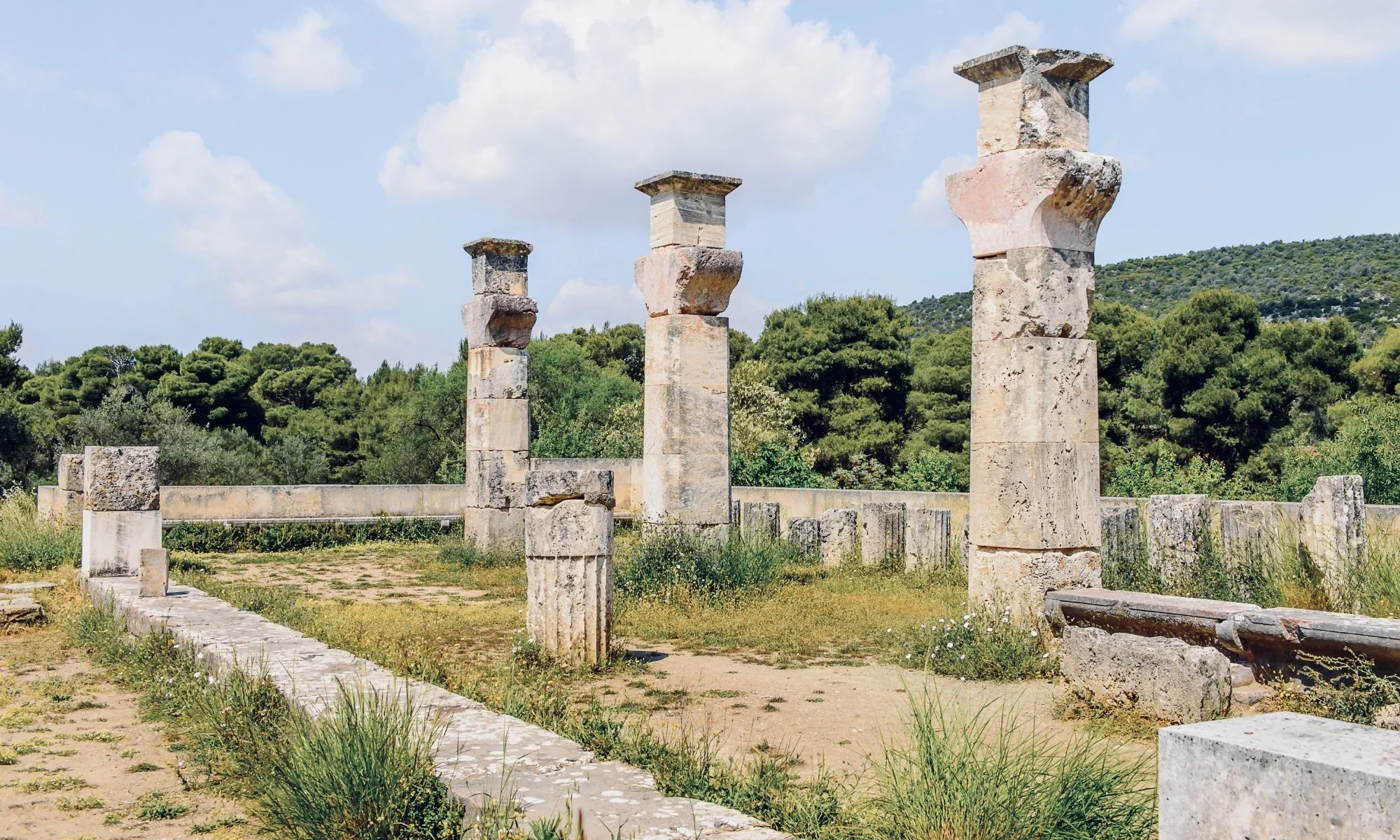
Not necessarily as predictions, but as something worth paying attention to. Ancient Egyptians recorded and interpreted them. The Greeks built sanctuaries to Asclepius where people would travel, sleep and wait for guidance to arrive through dreams. Across cultures, people paid attention to symbols, plants, the sky, the body and nature.
Somewhere along the way, we became much better at looking outside ourselves for answers, and less familiar with our own deep knowing.
We have more information available to us than any generation before us, which in many ways is extraordinary but also scary. It seems that we’ve become worse at recognising what we know before we can explain why we know it.
We call it intuition. Gut feeling. Instinct. Inner knowing.
But what does that actually feel like?
Learning your language
I think this is where “trust your intuition” sometimes becomes frustrating advice.
First, you have to know how your intuition talks to you.
Maybe you feel it literally in your gut. A contraction when something isn’t right. A sense of expansion when it is. Happy tears.
Maybe it’s a tingling in your body. Goosebumps. A sudden heaviness, cold, or an unexpected feeling of lightness.
Maybe yours isn’t particularly physical at all.
It might be the first thought that appears before your mind starts negotiating with it. A strange certainty without an argument behind it. A person who comes into your mind repeatedly. A place you keep being pulled towards. A smell out of nowhere. A dream you wake from knowing you shouldn’t ignore.
Like when a sunset in Canggu somehow showed me the way to Australia, or a dream in the middle of the night put Byron Bay in my head.
And sometimes it may be much less mystical than all of that.
Just a very quiet no.
The interesting and important part is noticing your own pattern.
Think back to the times you knew something before you had proof.
Maybe you felt uncomfortable around somebody everyone else liked. You knew you should take an opportunity that made absolutely no sense. You felt pulled towards a place and understood why only much later.
What happened in your body before your mind got involved?
That’s where I would start.
Not by asking yourself to become “more intuitive,” but by collecting evidence of how your intuition has already spoken to you.
Write down three moments when you had a strong feeling about something and later discovered there was a reason for it.
Then go backwards.
Where did you feel it?
What was the first thought?
Was there a physical sensation?
Did it arrive suddenly, or keep returning?
Did it feel urgent, or strangely calm?
Did you listen to it?
Over time, you start recognising a language that is yours.
And then there is fear
This is the difficult part.
Because fear lives in the body too.
Anxiety can tighten the stomach. Desire can feel like certainty. Wanting an answer badly enough can make almost anything look like a sign.
So I don’t think trusting your intuition means treating every feeling as truth.
Fear, for me, is the second thought.
The first one arrives on its own. Then fear turns up right behind it, with all the reasons why not.
And I’ve noticed fear often comes through strongest when something is asking me to expand. That’s usually when I know I’m onto something.
Fear can also come from what happened before. Someone hurt you, so your mind tells you it will happen again. Something went wrong once, so your body prepares for it to go wrong again.
But the past repeating itself in your head isn’t the same as knowing what comes next.
That’s why learning your own language matters. Not every sensation is a sign. Not every fear is a warning.
The practice is to notice the first thought before all the other voices begin.
To become curious about the sensations, dreams, thoughts and tiny internal shifts that repeat themselves.
To learn which ones have led you somewhere true before.
We spend so much time learning other people’s languages.
So little time learning our own.