There Are Other Ways to Alter an Evening
Blue Lotus, Kava, Tulsi and the ritual beyond alcohol.
I haven’t had a drink in over four years. I don’t say that as an achievement, only because it has given me a long time to question what alcohol was actually bringing me.
What still surprises me is how normalised it is. Alcohol affects the gut microbiome and remains one of the most widely used psychoactive substances in the world, yet people are far more frightened of cannabis or psychedelics. We hand someone a glass the moment they walk through the door and think nothing of it.
And maybe the interesting part isn’t that humans want to alter how they feel. We always have.
Long before the evening glass of wine, civilisations were building relationships with plants. Plants to gather around, plants for ceremony, plants for healing, plants for dreaming. Some were taken to soften the body or quiet the mind. Others belonged to rites of passage, prayer, divination or encounters with the divine.
The Egyptians had Blue Lotus. Across the Pacific, kava became part of ceremonial and social life. In India, Tulsi came to occupy a sacred place in the home and in Ayurvedic tradition.
Three completely different plants from three different parts of the world. They weren’t created as “alcohol alternatives,” of course. Their histories are much older and richer than that.
But I find myself thinking about them in that context now.
Because perhaps what we’re looking for when we reach for a drink isn’t always the alcohol itself.
Sometimes we want to soften.
Sometimes we want to connect.
Sometimes we want the day to end and the evening to begin.
Sometimes we want to change our state entirely.
And there are other ways to do that.
Blue Lotus
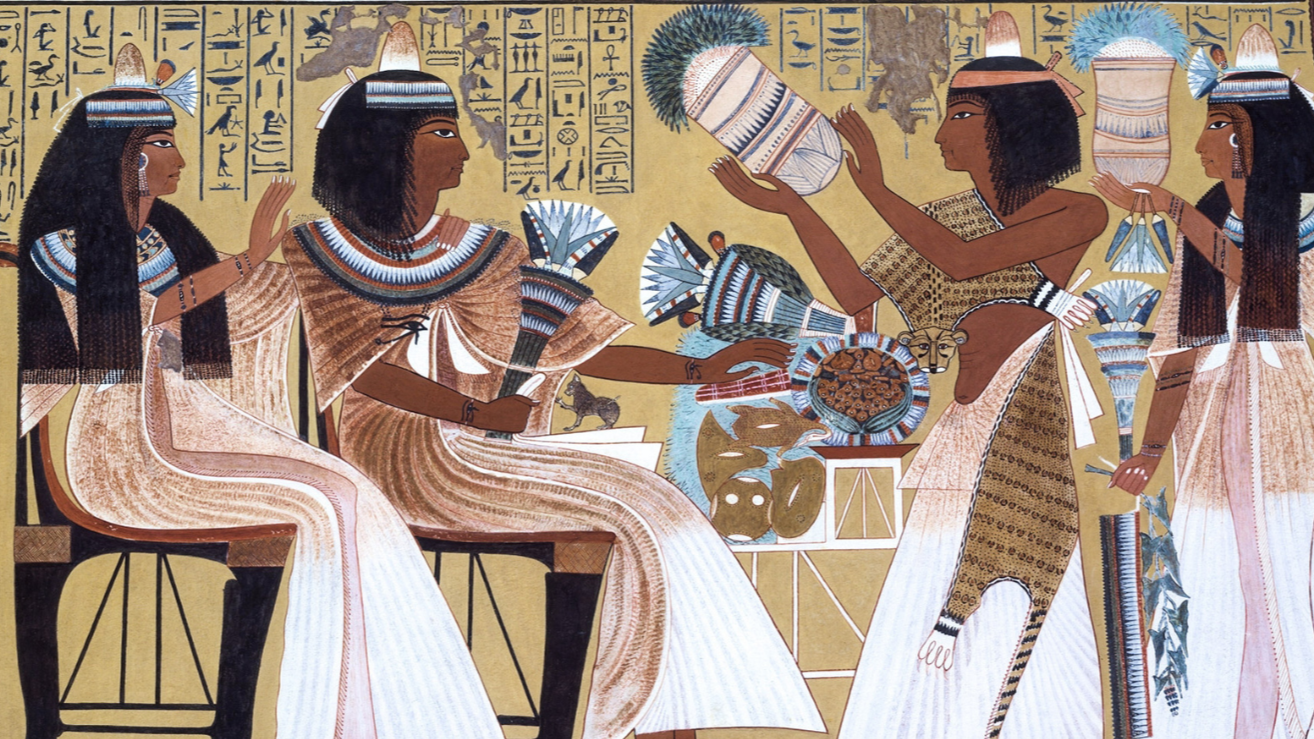
Of the three, Blue Lotus is the one I find hardest to talk about without sounding slightly obsessed.
Nymphaea caerulea is technically a water lily, not a lotus. It opens in the morning and closes at night.
Once you start looking for Blue Lotus in Egyptian imagery, you see it everywhere.
At banquets. In tomb paintings. Held towards the face. Among offerings. Beside images concerned with death, rebirth and the divine.
They connected it to the sun and to rebirth. A flower that closes and comes back.
Blue Lotus is a very special kind of plant. It brings vivid dreams, a euphoric calm, sensuality. It opens the third eye, and with it, intuition.
To me this plant is sacred. I don’t take it casually.
There is something beautiful about making an evening drink from a flower once held in the hands of people living along the Nile thousands of years ago. Not because we need to recreate Ancient Egypt at the kitchen table, but because ritual can connect an ordinary moment to something much older than ourselves.
Kava
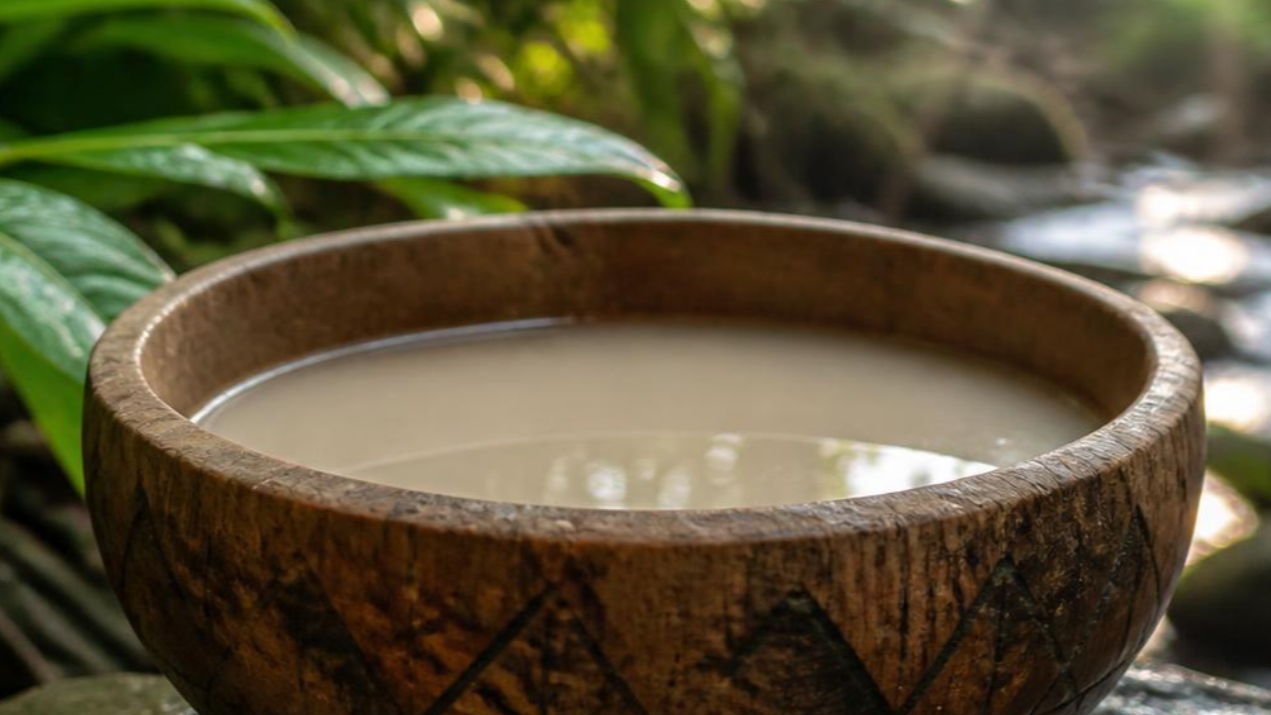
I personally believe that part of why people drink is to loosen. To find conversation easier, to be less in your own head in a room full of people.
Kava does that. But it doesn’t take your senses with it. You stay lucid. Nothing blurs.
That’s the difference, and it’s the whole difference.
It comes from the root of Piper methysticum, native to the Pacific Islands. In Fiji, Vanuatu and Tonga it has been prepared and shared for generations: ceremonies, meetings, ordinary evenings. Mixed with water, passed around.
So the idea of a drink that brings people together without alcohol isn’t new. It just isn’t ours.
Of the three plants here, kava is the one with the most research behind it, particularly around anxiety. It’s also strong. Traditional water-prepared root has a long safety record; concentrated extracts and heavy daily use have been linked to liver problems, and it isn’t one to mix with alcohol.
Tulsi
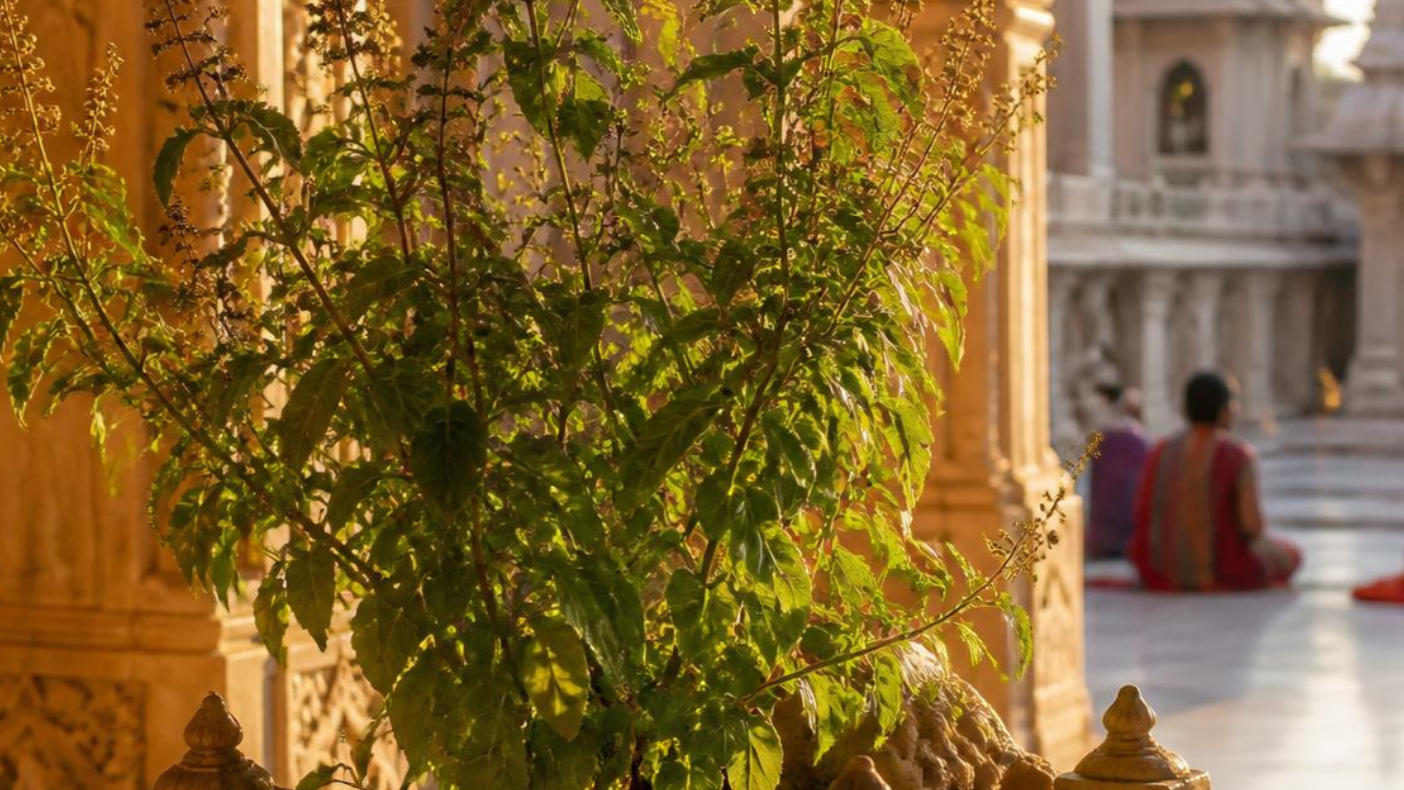
Tulsi is different.
Holy Basil, Ocimum tenuiflorum, sacred in India for thousands of years. Grown around homes and temples. Associated with the goddess Tulsi, and with Vishnu.
Unlike Blue Lotus or kava, I wouldn’t reach for Tulsi to alter my state.
I’d reach for it because sometimes we don’t need to.
It’s adaptogenic, it helps the body hold stress rather than absorb it.
A warm cup. The smell of the leaves. The act of making it. Sitting somewhere for ten minutes as the light changes outside.
That can be enough.
Not every evening needs to be altered. Sometimes it just needs a moment that says the day is done.
What are we actually looking for when we drink alcohol?
To calm us?
To make conversation easier?
To make an ordinary evening feel like something?
To open something, or close it?
Blue Lotus belongs to dreams, intuition, the space between.
Kava belongs to gathering.
Tulsi belongs to the evenings when nothing needs to happen at all.
Each of them was held by people who meant something by it.
We have forgotten how many ways there are to experience an evening.
Blue Lotus, kava and tulsi are three plants out of hundreds.
There is an entire world of plants, rituals and traditions outside the bottle.
Maybe it’s time we became curious about it.